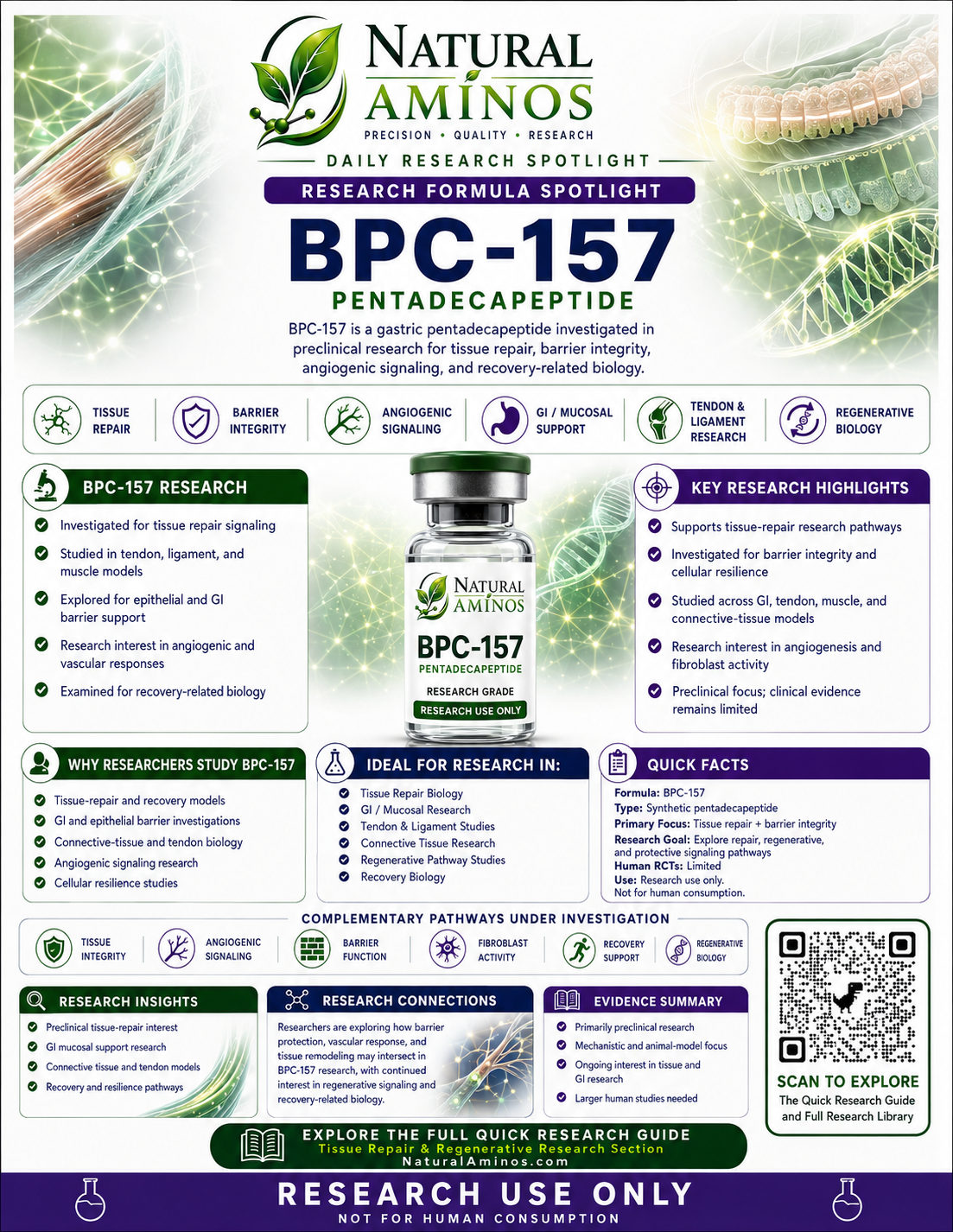
BPC-157 Research Data
For laboratory research use only; not for human or veterinary use or consumption. This page provides research information, not personal-use instructions or medical advice.
Natural Aminos Research Formula of the Day — BPC-157
Benefits
BPC-157 is a synthetic pentadecapeptide (15 amino acids) derived from a protective compound found in gastric juice. Research points to it supporting tissue healing across skin, muscle, bone, ligament, and tendon in animal studies, largely through promoting blood vessel formation, collagen synthesis, fibroblast activity, and modulation of nitric oxide pathways. Small human studies have also reported benefit: a retrospective study of intra-articular BPC-157 injections found 91.6% of patients with knee pain reported significant improvement, and a pilot study in women with treatment-resistant interstitial cystitis found 10 of 12 patients had complete symptom resolution after intravenous BPC-157.
Uses
BPC-157 is most studied for gut repair, given its origin in gastric juice, including protecting and healing the gut lining in models of inflammatory bowel conditions, and is widely used in research settings for tendon, ligament, muscle, and connective tissue recovery — the application most commonly discussed outside its original gastrointestinal context.
Published Research
BPC-157's evidence base leans heavily on animal and lab (preclinical) data, with a thinner but real human evidence layer beginning to emerge. A rat study on spinal cord injury found all injured rats receiving BPC-157 showed consistent clinical improvement, better tail motor function, and resolved spasticity by day 15, and tendon fibroblast research identified BPC-157 as upregulating growth hormone receptor expression, a possible mechanism behind its tissue-repair effects. On the human side, the knee-pain study (16 patients) and interstitial cystitis study (12 patients) cited above are genuinely small but published and peer-reviewed-adjacent — a step further than most research peptides, which have no human data at all.
Despite this, there are currently no human pharmacokinetic studies assessing how BPC-157's animal findings translate to people, and it hasn't been approved for standard medical use by the FDA or any other global regulator, due to a lack of sufficient large-scale clinical studies confirming benefits in humans.
Why More Research Is Needed
BPC-157's core gap is scale: the human studies that exist are real and published, but they're small (12-16 participants), single-site, and haven't been followed up with larger randomized controlled trials. Without human pharmacokinetic data, basic questions about dosing, absorption, and how long effects last in people remain unanswered — researchers are largely extrapolating from animal dosing protocols. Its popularity in fitness and injury-recovery communities has significantly outpaced the human evidence supporting those specific uses, and larger, properly controlled trials are the clear next step before its tissue-repair reputation could be considered established rather than promising.
Sources
Examine.com — BPC-157 Research Breakdown
Rupa Health — BPC-157 Science-Backed Uses, Benefits, Dosage
PubMed — From Regeneration to Analgesia: BPC-157 in Tissue Repair and Pain Management
PMC — Multifunctionality and Possible Medical Application of BPC 157
PMC — BPC 157 and Growth Hormone Receptor Expression in Tendon Fibroblasts
PMC — BPC 157 and Spinal Cord Injury Healing in Rats
Hashtags
#Peptidetherapy #PeptideResearch #PeptideScience #Biohacking #ResearchPeptides #ScienceBased #BPC157 #TissueRepair #MuscleRecovery #InjuryRecovery #RecoveryScience #MuscleRepair