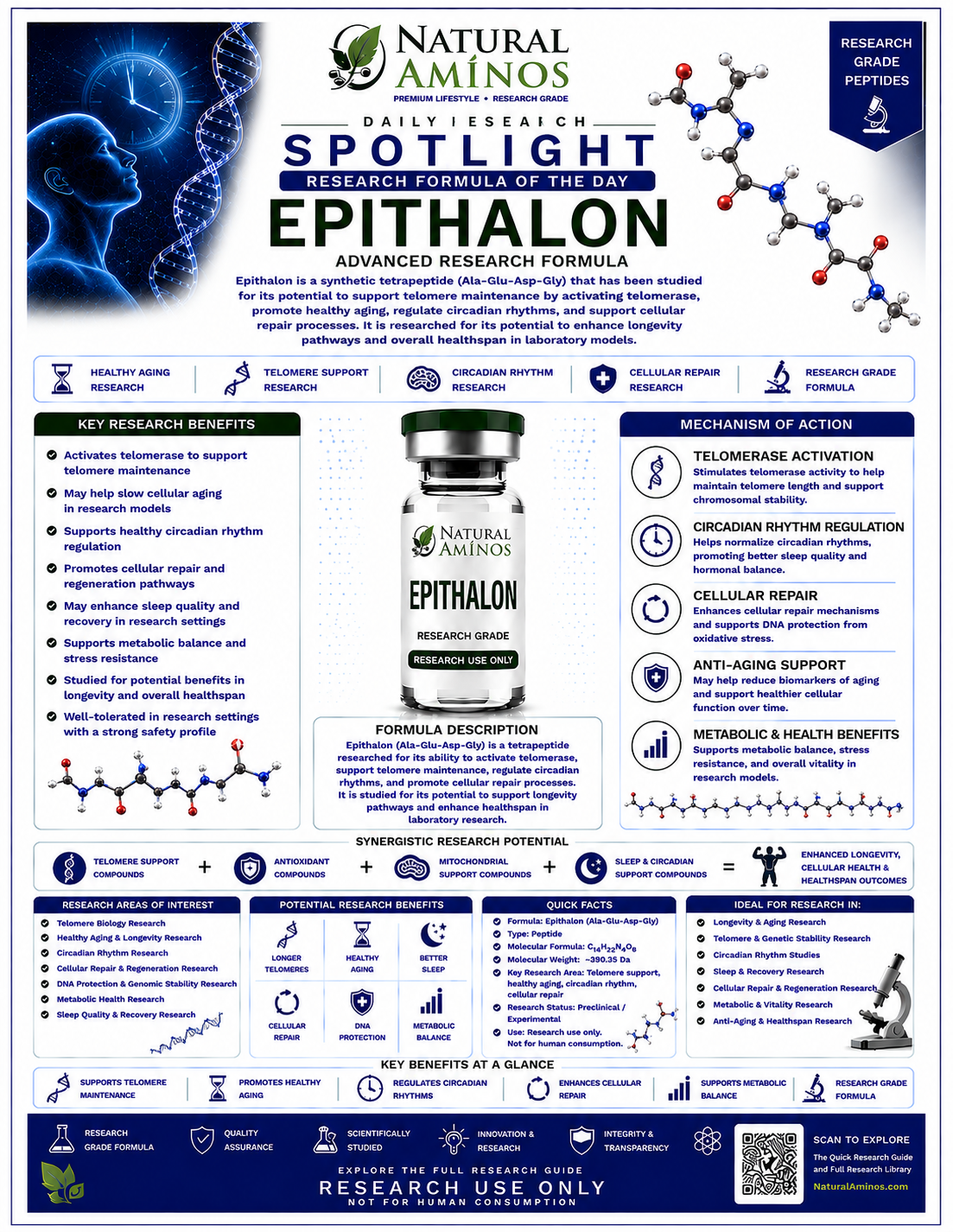
Epithalon Research Data
For laboratory research use only; not for human or veterinary use or consumption. This page provides research information, not personal-use instructions or medical advice.
Natural Aminos Research Formula of the Day — Epithalon (Epitalon)
Benefits
Epithalon (also called Epitalon or Epithalone) is a synthetic tetrapeptide, Ala-Glu-Asp-Gly (AEDG), developed at the St. Petersburg Institute of Bioregulation and Gerontology based on the amino acid composition of Epithalamin, a bovine pineal gland extract studied since the mid-20th century. Its best-known and most-cited finding is telomerase activation: a peer-reviewed, PubMed-indexed 2003 study found Epithalon peptide induced telomerase activity and telomere elongation in telomerase-negative human fetal fibroblast cell cultures — a genuine, independently verifiable in vitro finding, unlike some other Khavinson-family peptides. Animal research has also shown it extends lifespan in mice and rats, particularly strains predisposed to rapid aging or high cancer risk, notably without inducing tumor growth. Broader reviews describe additional antioxidant, neuroprotective, and antimutagenic effects.
Uses
Epithalon is researched and used clinically in Russia — with over 30 years of study and use in that setting — primarily in elderly populations with cardiovascular and metabolic disease, framed as a geroprotective (aging-slowing) agent. It's not FDA-approved and has no established Western clinical use; outside Russia it's sold strictly as a research compound.
Published Research
Epithalon sits in a meaningfully different evidence category than some other Khavinson-family peptides covered in this series (such as Cartalax) — its core cellular mechanism is documented in an independently verifiable, PubMed-indexed publication (Khavinson et al., 2003, cited across multiple recent reviews), not just vendor-page claims. A 2026 narrative review on therapeutic peptides in gerontology specifically lists epitalon among a small set of peptides with genuine mechanistic and evidence support for aging-related applications, alongside compounds like tirzepatide and GHK-Cu, while noting that non-FDA-approved peptides in that category generally show 'promising preclinical and limited clinical evidence but lack long-term safety data and systematic validation.' A dedicated 2025 review describes 25 years of research across in vitro, in vivo, and in silico methods, concluding the compound shows significant geroprotective and neuroendocrine effects.
The clinical trial history specifically attributed to Epithalon comes almost entirely from Russian research and clinical practice over three-plus decades, reportedly including trials in elderly patients with cardiovascular and metabolic disease. However, this search could not independently verify the specific design, sample sizes, or peer-reviewed publication details of those individual Russian clinical trials beyond secondary reviews citing them — a real limitation, since most available English-language sourcing describes the existence and general findings of this clinical history rather than providing direct access to the primary trial data. Outside Russia, independently available human research remains limited, and reviewers explicitly note this gap.
Why More Research Is Needed
Epithalon's gap is somewhat different from most compounds in this series: its foundational in vitro mechanism (telomerase activation) is genuinely well-documented and independently verifiable, and it has real animal lifespan-extension data plus a multi-decade Russian clinical history — a stronger starting position than most research peptides. But the actual clinical trial evidence behind that Russian use is not independently accessible or verifiable through standard English-language literature searches, meaning its real-world human efficacy rests on institutional track record and secondary citations rather than directly reviewable trial data. Outside Russia, dedicated Western human trials essentially don't exist. The clear next step researchers themselves point to is bringing this compound through modern, internationally accessible, peer-reviewed clinical trials — not because the underlying science looks weak, but because the existing clinical evidence isn't transparently verifiable to outside researchers.
Sources
ResearchGate — Epithalon Peptide Induces Telomerase Activity and Telomere Elongation in Human Somatic Cells (Khavinson et al., 2003)
PMC — Overview of Epitalon—Highly Bioactive Pineal Tetrapeptide with Promising Properties (2025 review)
Revolution Health & Wellness — Epithalon Peptide and Telomere Science: A New Frontier in Anti-Aging
(Review) — Therapeutic Peptides in Gerontology: Mechanisms and Applications for Healthy Aging (2026)
Hashtags
#PeptideResearch #ResearchPeptides #Biohacking #ScienceBased #LongevityResearch #Longevity #HealthyAging #CellularHealth #AntiAging #LongevityScience