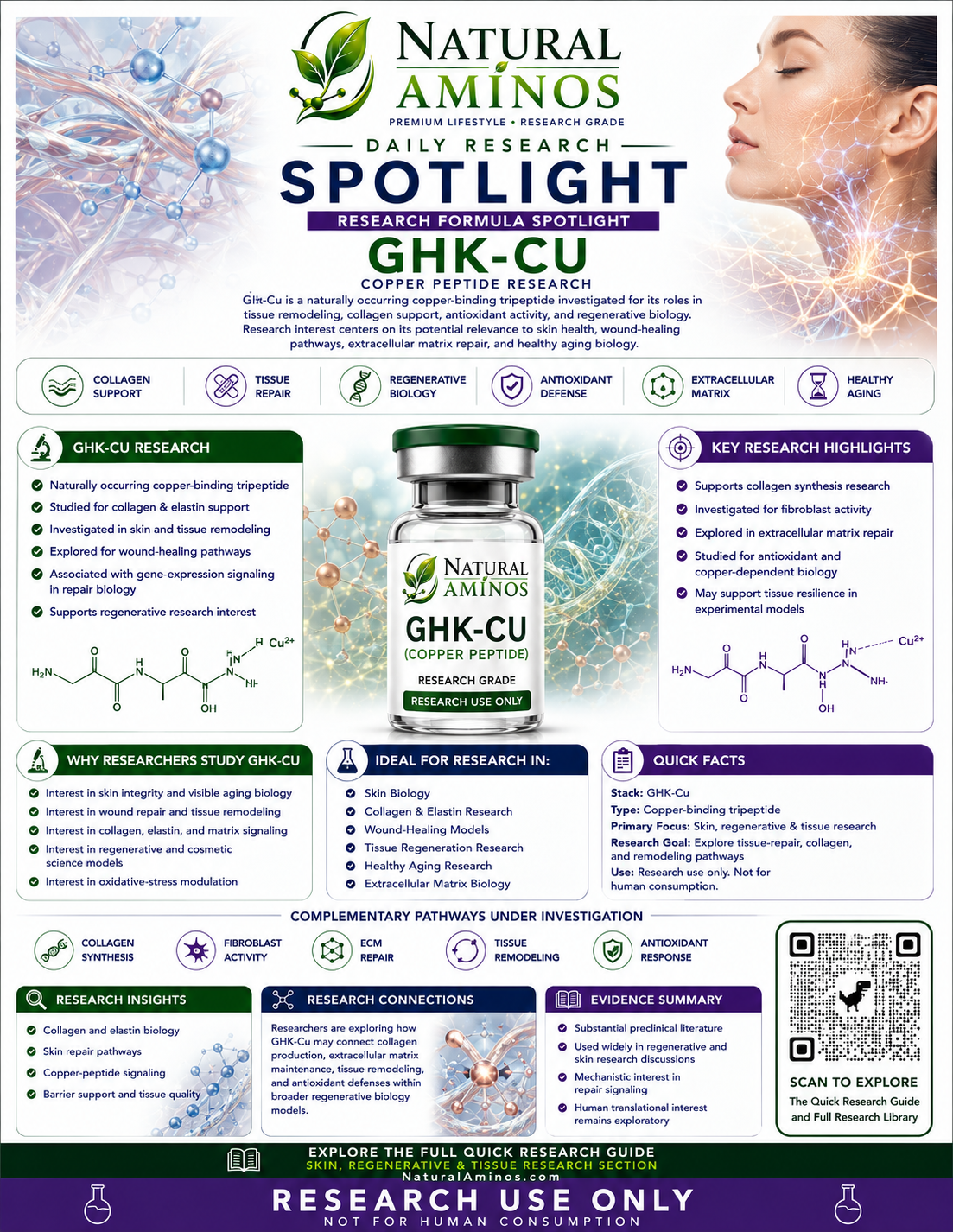
GHK-Cu Research Data
For laboratory research use only; not for human or veterinary use or consumption. This page provides research information, not personal-use instructions or medical advice.
Natural Aminos Research Formula of the Day — GHK-Cu
Benefits
GHK-Cu is a naturally occurring copper-binding tripeptide that appears in human plasma, saliva, and urine, with levels declining significantly as we age — plasma concentration drops from roughly 200 ng/mL at age 20 to about 80 ng/mL by age 60. It's best known for skin and tissue regeneration: research shows it stimulates collagen and glycosaminoglycan production and improves wound healing in both lab and clinical settings. It also carries antioxidant activity, reducing oxidative stress in UV-damaged skin cells by roughly half in lab studies, and has been shown to promote new blood vessel growth and support wound contraction.
Uses
GHK-Cu shows up in two main forms: topical use in serums and creams for collagen support, firmness, and texture — by far the most common and best-supported application — and an injectable form used in supervised research protocols for wound care and tissue repair, which is not FDA-approved for that route. It's a long-standing ingredient in cosmetic dermatology specifically, with decades of use in that narrower context.
Published Research
GHK-Cu has one of the more established evidence bases among peptides in this series, particularly for its original topical/cosmetic application — it's been studied and used in skincare formulations for over three decades, with real published human data behind its collagen-stimulating and skin-firming effects. A 2023 animal model found GHK-Cu accelerated diabetic wound closure by roughly 40% via the PI3K/Akt signaling pathway. Its collagen- and elastin-stimulating effects in skin have been documented across both laboratory and clinical wound-care research, and multiple published studies support its use in topical anti-aging formulations specifically.
Where the evidence thins out is beyond the topical/cosmetic use case. A 2026 review notes GHK-Cu remains classified as a cosmetic ingredient rather than an FDA-approved drug, meaning it hasn't gone through the clinical trial process required for a genuine drug approval — its topical cosmetic use rests on a different, lower regulatory bar than a therapeutic claim would require. Injectable and systemic use for broader tissue-repair or anti-aging claims is considered off-label and investigational, with a comparatively thinner human trial base than its topical skincare application.
Why More Research Is Needed
GHK-Cu's gap depends heavily on which use is being evaluated. As a topical cosmetic ingredient, it's genuinely one of the better-supported compounds in this series, with real published human skin research behind it. But the gap widens considerably for injectable, systemic, or broader regenerative-medicine claims — that use case rests mostly on preclinical (animal/lab) data and mechanistic reasoning extended from the topical research, not dedicated human trials of its own. Long-term safety data for injectable/systemic use, and head-to-head trials comparing it against other topical actives, are the areas most in need of further study.
Sources
Rite Aid — GHK-Cu Peptide: Benefits, Dosage & Topical Use
Nationwide Peptides — GHK-Cu Copper Peptide 2026 Review
Westlake Dermatology — A Dermatologist's Take on GHK-Cu
Hashtags
#Peptidetherapy #PeptideResearch #PeptideScience #Biohacking #ResearchPeptides #ScienceBased #GHKCu #PeptideSkincare #SkinRegeneration #CollagenPeptides #AntiAgingSkin #RegenerativeSkin