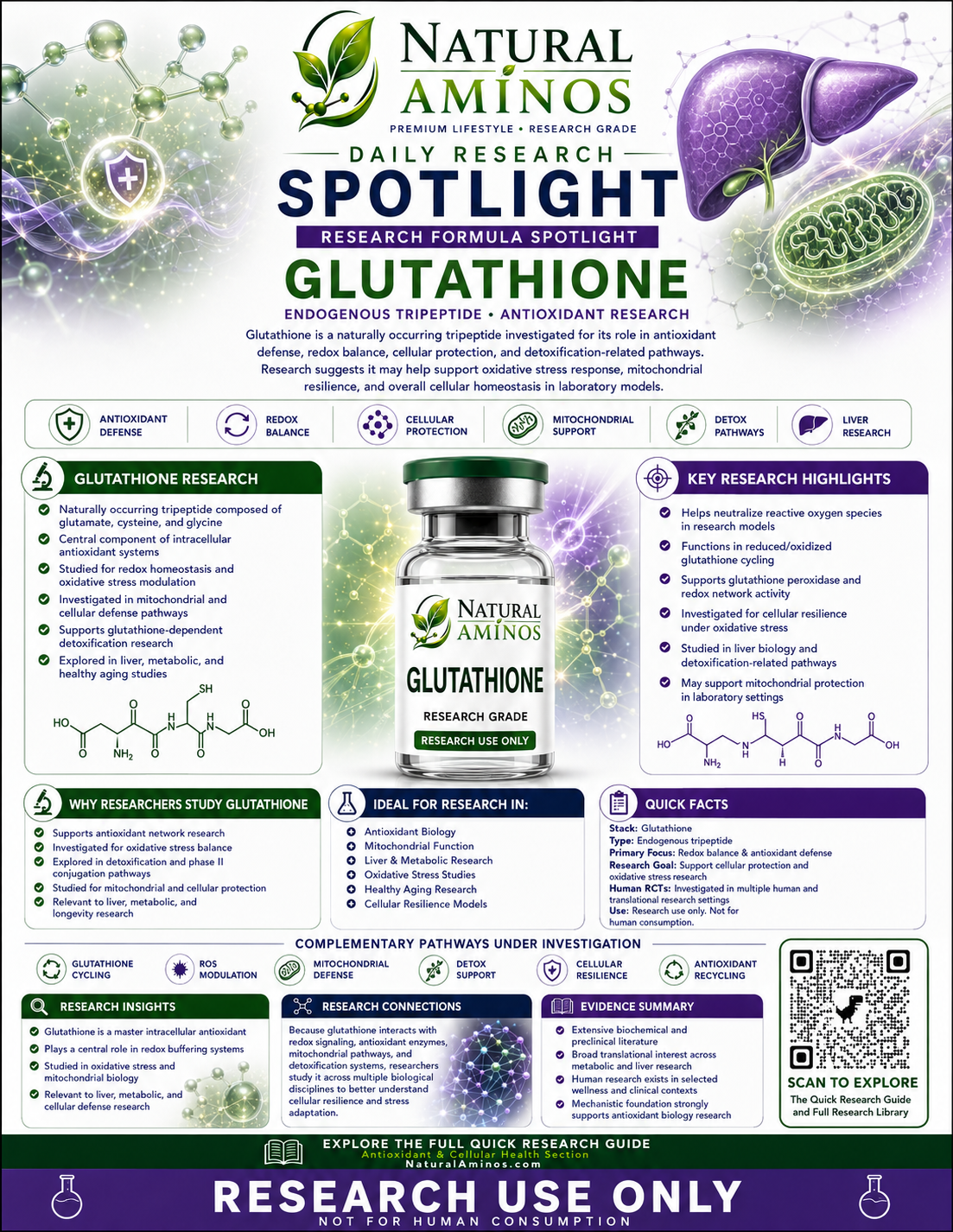
Glutathione Research Data
For laboratory research use only; not for human or veterinary use or consumption. This page provides research information, not personal-use instructions or medical advice.
Natural Aminos Research Formula of the Day — Glutathione (GSH)
Benefits
Glutathione (GSH) is the body's most abundant endogenous intracellular antioxidant — a tripeptide made from glutamate, cysteine, and glycine, sometimes called the 'master antioxidant.' It plays a central role in detoxifying free radicals and maintaining cellular redox balance, working alongside enzymes like GSH peroxidase and glutaredoxin. Aging and conditions like diabetes are associated with GSH deficiency, driven largely by reduced availability of its glycine and cysteine building blocks rather than a simple production failure.
Uses
Glutathione is researched and used for oxidative stress reduction, metabolic and blood sugar support in type 2 diabetes, general antioxidant/anti-aging wellness, skin brightening (a common off-label cosmetic use, particularly via IV administration), and detoxification support. It's FDA-recognized as Generally Recognized as Safe (GRAS) for food use, but this is a food-safety classification, not a therapeutic drug approval.
Published Research
Glutathione has a genuinely solid human RCT base — a real distinction from many compounds in this series. A 2022 randomized clinical trial (Antioxidants journal) in 250 diabetic and 104 non-diabetic individuals gave 125 diabetic patients 500 mg oral GSH daily for six months and found it improved HbA1c and reduced the oxidative damage marker 8-OHdG, concluding oral GSH potentially complements anti-diabetic therapy in achieving better glycemic control, particularly in elderly patients. A separate pilot clinical trial testing a related approach — glycine and N-acetylcysteine (GlyNAC), the two amino acid precursors GSH synthesis depends on — found it corrected glutathione deficiency in older adults and improved oxidative stress, mitochondrial function, inflammation, insulin resistance, muscle strength, and cognition.
A key open question specific to glutathione, addressed directly in a March 2026 randomized crossover trial (MDPI Antioxidants), is oral bioavailability — since GSH is a peptide, it can be broken down by digestion before absorption, which is why IV and liposomal/micellar formulations exist as workarounds. That 2026 study compared a novel micellar formulation against standard and liposomal oral glutathione and found systemic GSH exposure increased with the micellar form, but the authors were explicit that functional antioxidant endpoints and longer-term clinical outcomes were not assessed in this study, and the sample size was modest — meaning even genuinely positive bioavailability findings haven't yet been connected to proven clinical benefit for that specific formulation.
Separately, a 2021 meta-analysis of glutathione supplementation studies has examined blood level changes across supplementation forms, providing a broader evidence synthesis on which delivery methods reliably raise measurable GSH levels in the body.
Why More Research Is Needed
Glutathione's gap is somewhat different from most compounds in this series: the core biology and endogenous role are extremely well established, and there's real, published human RCT data showing metabolic benefit in a specific population (elderly type 2 diabetics). But the field is still actively working out a more basic practical question — which delivery form (oral, liposomal, micellar, IV) actually gets meaningful amounts of glutathione into the body, since standard oral GSH is vulnerable to digestive breakdown. The newer micellar-formulation research shows promising absorption data but explicitly hasn't yet been connected to functional or long-term clinical outcomes. Popular off-label uses like skin brightening and general detox/anti-aging claims have far less direct trial support than the diabetes/oxidative-stress research described above.
Sources
Antioxidants (MDPI) — Randomised Clinical Trial of Long-Term Glutathione Supplementation Offers Protection from Oxidative Damage, Improves HbA1c in Elderly Type 2 Diabetic Patients (Kalamkar et al., 2022)
Clinical and Translational Medicine — Glycine and N-Acetylcysteine (GlyNAC) Supplementation in Older Adults Improves Glutathione Deficiency, Oxidative Stress, Mitochondrial Dysfunction (Kumar et al., 2021)
Antioxidants (MDPI) — A Targeted Metabolomic Assessment of Oral Glutathione Bioavailability and Safety in Humans: A Randomized Crossover Clinical Trial (2026)
Journal of Current Science and Technology — Glutathione Levels After Glutathione Supplementation: A Systematic Review and Meta-Analysis
FDA — GRAS Notice 293: Glutathione
Hashtags
#PeptideResearch #ResearchPeptides #Biohacking #ScienceBased #WellnessScience #CellularHealth #MetabolicHealth #Longevity #HealthyAging #AntiAging