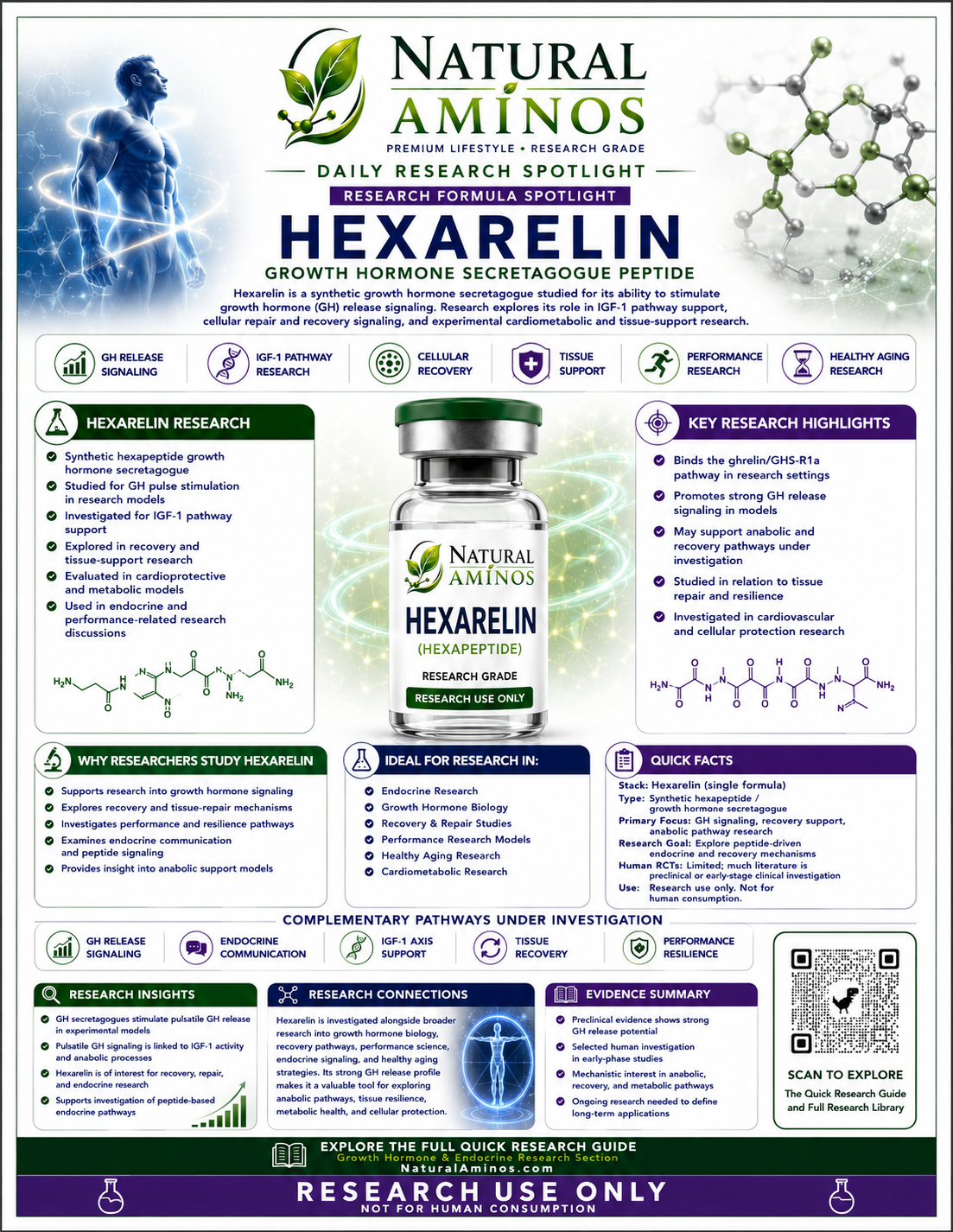
Hexarelin Research Data
For laboratory research use only; not for human or veterinary use or consumption. This page provides research information, not personal-use instructions or medical advice.
Natural Aminos Research Formula of the Day — Hexarelin
Benefits
Hexarelin is a synthetic six-amino-acid growth hormone-releasing peptide (GHRP), one of the most potent GH secretagogues studied. Research links it to significant, rapid GH release (peaking within 30 minutes of injection), increases in downstream IGF-1, support for muscle growth and regeneration, and — somewhat uniquely among GHRPs — cardioprotective effects, including protection against postischemic dysfunction in aged and GH-deficient hearts. It has also shown neuroprotective activity in animal studies, reducing brain inflammation and increasing hippocampal neurogenesis.
Uses
Hexarelin is used in research settings for muscle growth and body composition support, recovery and joint rejuvenation, and its cardioprotective and neuroprotective properties are an active area of separate investigation. It's typically cycled (e.g., 4 weeks on / 4 weeks off) to avoid GH receptor desensitization, and is often studied alongside GHRH-class peptides like Sermorelin or CJC-1295. It has no FDA approval for any use.
Published Research
Hexarelin has a real human clinical trial history, which sets it apart from many research peptides — but that history is now dated by current standards. Human studies from the late 1990s (Bowers et al., 1997, Endocrine Reviews) established its GH-releasing properties in people, and a 1999 study in the Journal of Clinical Endocrinology & Metabolism found measurable effects on cardiac performance in humans, an unusually direct clinical finding for a GH secretagogue. Long-term human dosing studies (16-week protocols) showed its GH-release effect tapers with continuous use but returns to baseline after a 4-week break — the evidence base behind the cycling protocols commonly used today.
Its more novel and arguably more interesting findings — cardioprotection against postischemic dysfunction and neuroprotection with increased hippocampal neurogenesis — remain confined to animal models and have not been confirmed in dedicated human trials. This is a meaningful split worth being direct about: the GH-release effect (its primary, most marketed use) has real human confirmation from over two decades ago, while the effects that make Hexarelin scientifically distinctive from other GHRPs (heart and brain protection) exist only in rodent research.
Why More Research Is Needed
Hexarelin's core gap is recency and scope. Its foundational human GH-release data is now more than 25 years old, conducted with smaller sample sizes and older research standards than a modern trial would use, and hasn't been meaningfully updated since. Its more scientifically interesting properties — cardioprotection and neuroprotection — are exactly the findings that haven't been tested in people at all, meaning the reasons Hexarelin stands out from other GH secretagogues in animal research are also the reasons it remains unproven beyond that. Modern human trials confirming both the original GH findings and, more importantly, testing whether the cardiac and neurological benefits translate to people, are the clear next step.
Sources
Particle Peptides — What is Hexarelin?
Peptides.org — Hexarelin: Reviews, Clinical Trials, and Safety
Circulation Research — Identification and Characterization of a New GHRP Receptor in the Heart
Revolution Health & Wellness — Hexarelin Peptide: Benefits, Protocol, and How It Boosts Growth Hormone
Hashtags
#Peptidetherapy #PeptideResearch #PeptideScience #Biohacking #ResearchPeptides #ScienceBased #Hexarelin #MuscleRecovery #HormonalHealth #RecoveryScience #NeuroScience