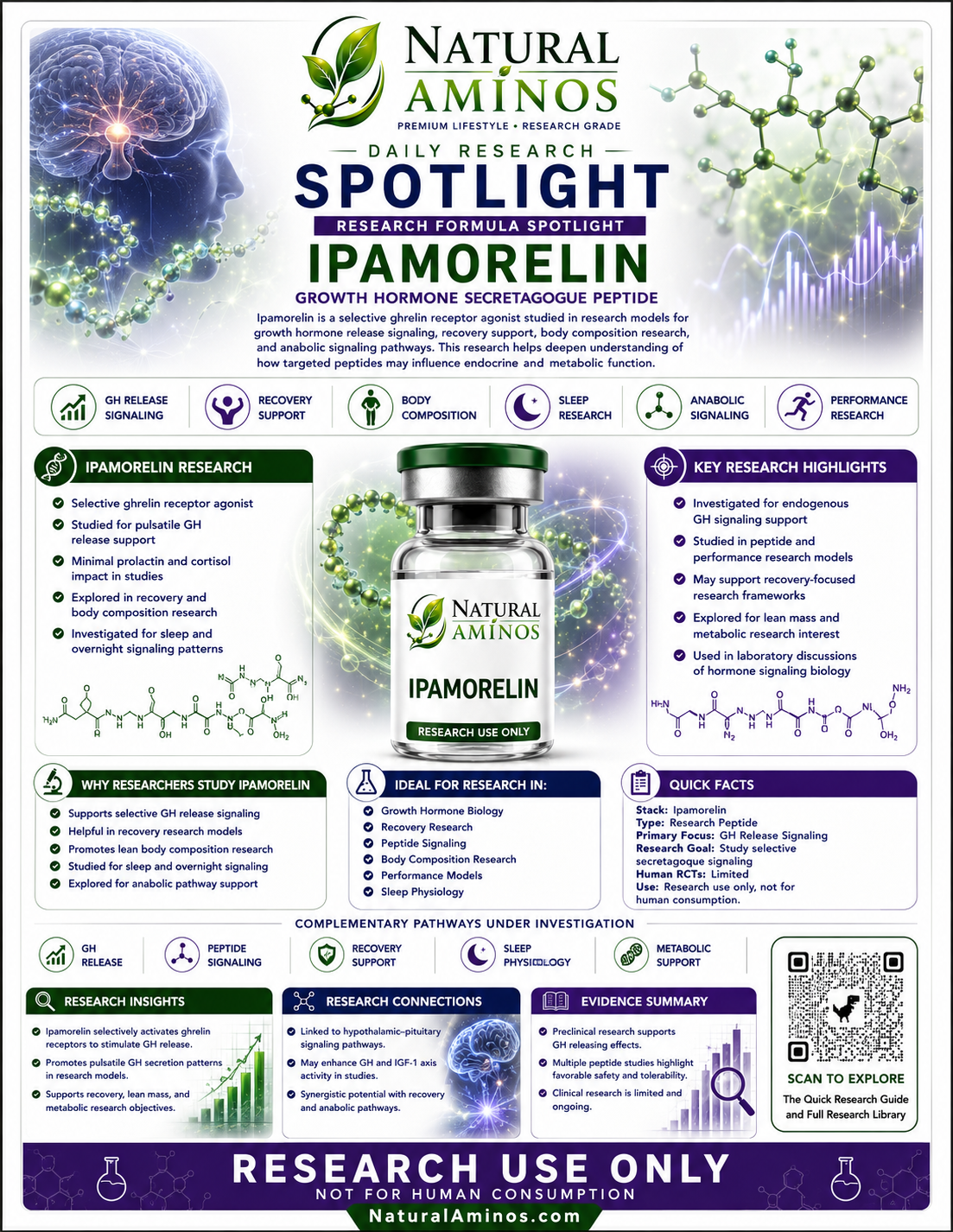
Ipamorelin Research Data
For laboratory research use only; not for human or veterinary use or consumption. This page provides research information, not personal-use instructions or medical advice.
Natural Aminos Research Formula of the Day — Ipamorelin
Benefits
Ipamorelin is a synthetic five-amino-acid growth hormone secretagogue that selectively stimulates the pituitary to release growth hormone via the ghrelin receptor (GHS-R1a). Its defining research feature is selectivity: multiple studies confirm it raises GH without significantly increasing cortisol, prolactin, or ACTH, and without the appetite stimulation seen with earlier-generation secretagogues like GHRP-6 and Hexarelin — a notably cleaner hormonal profile than older compounds in its class.
Uses
Ipamorelin is researched for growth-hormone-dependent effects: muscle protein synthesis, fat metabolism (lipolysis), and tissue repair support. Its most advanced clinical use case was as a treatment for postoperative ileus (delayed bowel function after surgery), based on GH's known effects on gut motility — it notably progressed all the way to a completed Phase II human trial for that specific indication.
Published Research
Ipamorelin has a dose-escalation pharmacokinetic/pharmacodynamic study in 40 healthy male volunteers (published in Pharmaceutical Research, 1999) confirming dose-proportional GH release peaking around 40 minutes post-dose with a 2-hour half-life, and establishing its selective GH-release profile without the cortisol/prolactin/ACTH increases seen with other secretagogues. It went further than most research peptides by reaching a completed Phase II randomized controlled trial for postoperative ileus (NCT00672074) — a real, registered clinical trial milestone most research peptides never achieve. However, that trial's results led to discontinued development for the indication without regulatory approval, meaning the trial didn't demonstrate sufficient benefit to justify moving forward.
As of 2026, reviews note only one completed, peer-reviewed randomized controlled trial of ipamorelin in humans has been published — the original 1999 PK/PD study — and no efficacy trials exist for the uses it's most popularly associated with today: muscle building, fat loss, or anti-aging. This is worth stating plainly: Ipamorelin's actual human research confirms it does what it's designed to do mechanistically (release GH selectively), but has never tested whether that translates into the downstream benefits (muscle, fat loss, longevity) it's commonly marketed for.
Why More Research Is Needed
Ipamorelin's core gap is a mismatch between what's proven and what's marketed. Its pharmacology and short-term safety in healthy volunteers are genuinely well characterized from real human data — that part is solid. But there's essentially no controlled human efficacy evidence for any of its popular downstream applications, and its one attempt at a therapeutic indication (postoperative ileus) didn't pan out well enough to continue development. Long-term human safety data beyond several weeks to months also hasn't been published. Dedicated trials testing actual body-composition or longevity outcomes — not just GH blood levels — are the clear next step before its popular use claims could be considered evidence-based rather than mechanistically plausible.
Sources
PubMed — Ipamorelin, the First Selective Growth Hormone Secretagogue (Raun et al., 1998)
Pharmaceutical Research (Springer) — Pharmacokinetic-Pharmacodynamic Modeling of Ipamorelin in Human Volunteers
Superpower — Ipamorelin: Mechanism, Research, and Status
ClinicalTrials.gov — Ipamorelin in Postoperative Ileus (NCT00672074)
Hashtags
#Peptidetherapy #PeptideResearch #PeptideScience #Biohacking #ResearchPeptides #ScienceBased #Ipamorelin #HormonalHealth #Metabolism #RecoveryScience