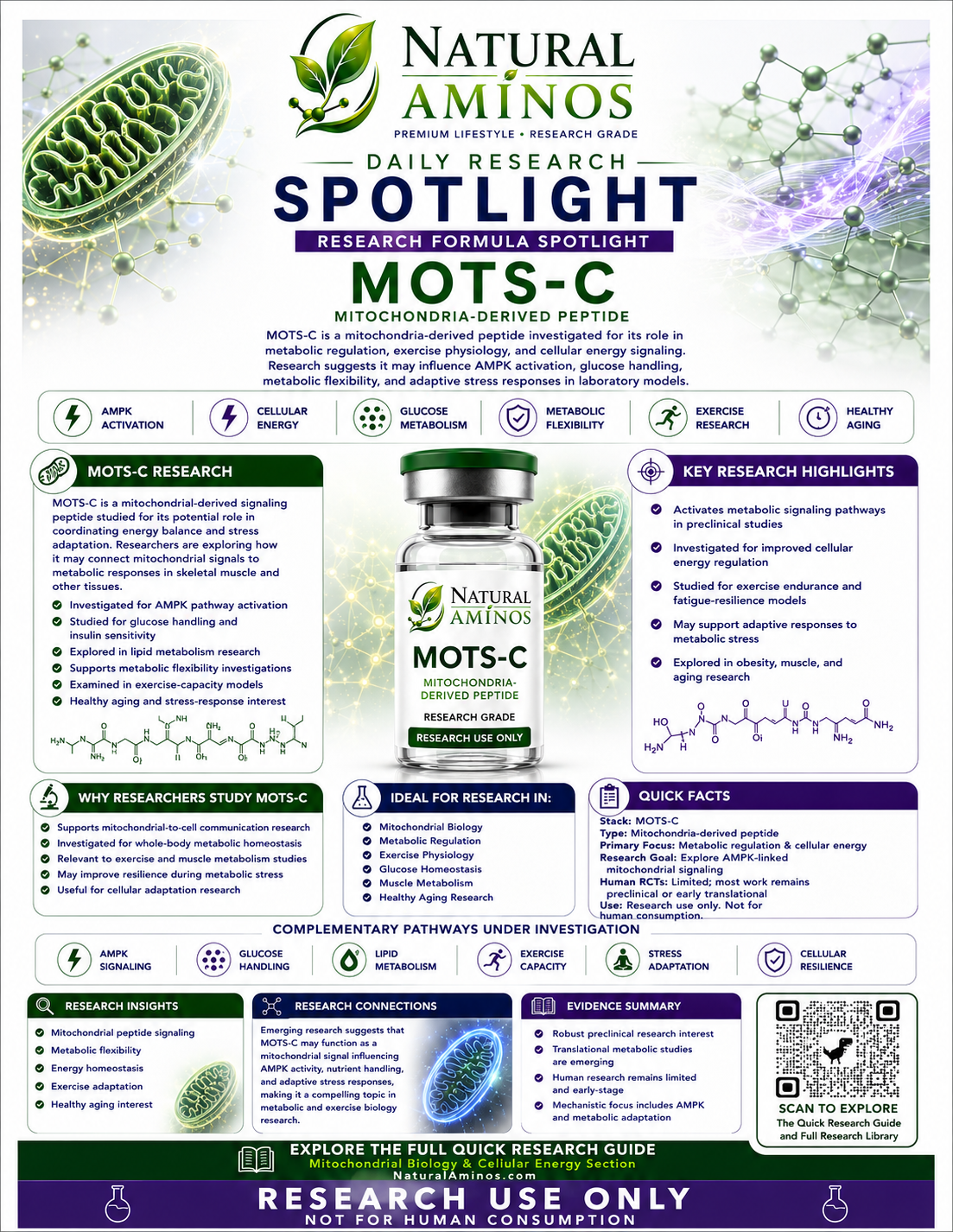
MOTS-c Research Data
For laboratory research use only; not for human or veterinary use or consumption. This page provides research information, not personal-use instructions or medical advice.
Natural Aminos Research Formula of the Day — MOTS-c
Benefits
MOTS-c is a 16-amino-acid peptide encoded by mitochondrial DNA itself — a distinctive origin that separates it from most research peptides, which are nuclear-DNA-derived or fully synthetic. It functions as a metabolic regulator, activating AMPK signaling to shift cells toward fat oxidation and improved glucose uptake, and translocates to the cell nucleus under metabolic stress to help regulate adaptive gene expression. It's often described as an 'exercise mimetic' because it triggers metabolic signaling similar to physical activity, and endogenous levels decline with age.
Uses
MOTS-c is researched for metabolic homeostasis, insulin sensitivity, exercise capacity, cardiac function under stress, and healthy-aging support. It is not an approved drug in any indication and has no established clinical use.
Published Research
MOTS-c's evidence is overwhelmingly preclinical, and it's worth being direct about how early-stage this compound actually is despite growing popularity in wellness contexts. Published rodent studies show it lowers blood glucose in diabetic models, improves cardiac function under pressure-overload heart failure conditions, and enhances skeletal muscle mitochondrial bioenergetics in an AMPK/PGC-1α-dependent way — a coherent, reproducible mechanistic story across multiple animal studies. A 2015 paper in Cell Metabolism first identified its similarity to metformin in glucose regulation, a comparison that's been influential in how the compound is discussed since.
Human data remains largely correlational rather than interventional: endogenous MOTS-c levels rise with exercise, which is suggestive but doesn't establish that administering exogenous MOTS-c produces the same benefits seen in rodent studies. Only early-stage human trials are underway as of 2026 — for example, a registered study in adults with obesity and fatty liver disease — meaning direct interventional human data on whether exogenous MOTS-c administration produces measurable metabolic benefit essentially doesn't exist yet.
Why More Research Is Needed
MOTS-c's gap is foundational: almost everything currently known about its effects comes from rodent models, and the human evidence that does exist is observational (endogenous levels correlating with exercise) rather than interventional (testing whether giving people MOTS-c produces an effect). That's a meaningfully different evidentiary position than compounds with even small human trials — MOTS-c hasn't yet reached the stage of testing its central claim in people at all. The early-stage human trials now underway are the necessary next step, and until results from those are published, claims about MOTS-c's benefits in humans remain extrapolated from animal data rather than demonstrated.
Sources
Rite Aid — MOTS-c Peptide: Benefits, Dosage & 2026 Legal Status
Frontiers in Physiology — MOTS-c Restores Mitochondrial Respiration in Type 2 Diabetic Heart
PMC — Mitochondria-Derived Peptide MOTS-c: Effects and Mechanisms Related to Stress, Metabolism and Aging
PubMed — MOTS-c Improves Intrinsic Muscle Mitochondrial Bioenergetic Health (PGC-1α/AMPK-Dependent)
Innerbody — MOTS-c Peptide: Benefits, Safety & Buying Advice
Hashtags
#PeptideResearch #ResearchPeptides #Biohacking #ScienceBased #Metabolism #MetabolicHealth #CellularHealth #MuscleMetabolism #LongevityResearch